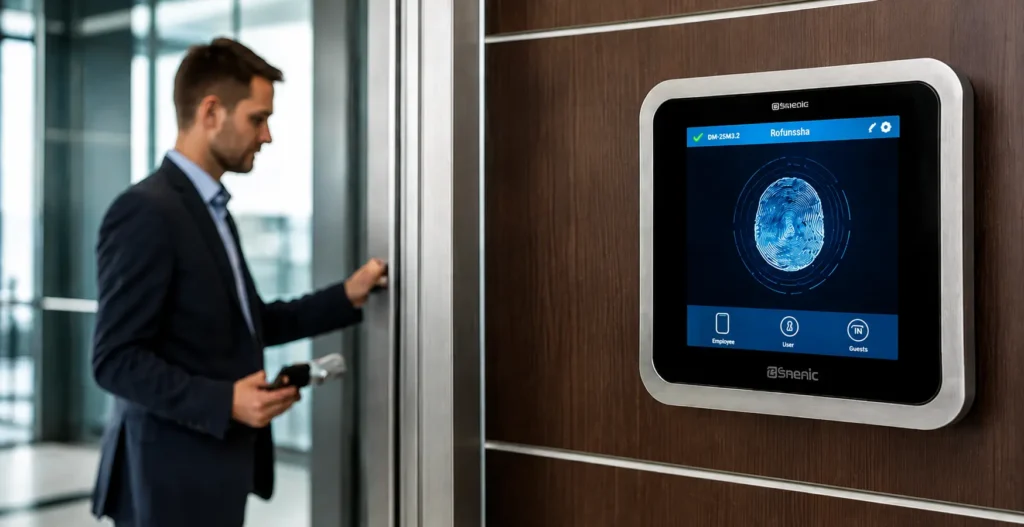
Protecting a business goes beyond installing locks and security cameras. Modern organizations need a smarter way to manage who can enter their facilities, access sensitive areas, and use critical resources. This is where an access control system becomes essential.
An access control system helps businesses regulate and monitor entry to buildings, offices, server rooms, warehouses, and other restricted areas. By replacing traditional keys with secure digital credentials, organizations can strengthen security, improve operational efficiency, and maintain greater control over their premises.
Whether you’re managing a corporate office, healthcare facility, educational institution, retail store, or industrial site, choosing the right access control solution is a critical investment for long-term security and business continuity.
This blog explores everything you need to know about access control systems, including how they work, their key components, different types, benefits, and how to choose the right solution for your business.
What Is an Access Control System?
An access control system is a security solution that regulates and manages who can enter specific locations, access certain resources, or use designated systems within an organization. Instead of relying on traditional keys, it verifies a user’s identity through secure credentials such as key cards, PIN codes, biometric authentication, or mobile devices before granting or denying access.
Modern access control systems do much more than unlock doors. They help organizations define user permissions, monitor entry and exit activities in real time, maintain detailed access logs, and strengthen overall security across multiple locations.
By ensuring that only authorized individuals can access sensitive areas, businesses can reduce security risks, protect valuable assets, safeguard confidential information, and improve compliance with industry regulations.
How Does an Access Control System Work?
An access control system follows a secure authentication process to determine whether a person is authorized to enter a specific area. When a user presents a credential, such as an access card, fingerprint, facial recognition, PIN, or mobile credential, the access reader captures the information and sends it to the access control panel or management software for verification.
The system then compares the user’s credentials against predefined permissions and security policies. If the user is authorized, the controller sends a signal to unlock the door, gate, or barrier. If the credentials are invalid or access is restricted, entry is denied.
Every access attempt, whether successful or unsuccessful, is automatically recorded to create a detailed audit trail. These records help businesses monitor activity, investigate incidents, and meet compliance requirements.
Modern cloud-based access control systems also allow administrators to manage permissions remotely, monitor multiple locations, receive real-time security alerts, and grant or revoke access instantly from anywhere.
Key Components of an Access Control System
An access control system consists of several components that work together to authenticate users, manage permissions, and secure entry points. Each component plays a vital role in ensuring seamless and reliable access management.
- Access credentials authenticate users through RFID cards, PINs, biometric data, or mobile credentials.
- Access readers and the control panel work together to verify credentials and grant or deny access based on predefined permissions.
- Electronic locking devices secure doors, gates, and turnstiles, unlocking only after successful authentication.
- Management software monitors access activity, manages user permissions, generates reports, and maintains audit logs for improved security and compliance.
Types of Access Control Models
Access control models determine how access permissions are assigned, managed, and enforced within an organization. The right model depends on your business structure, security needs, and compliance requirements.
- Discretionary Access Control (DAC): The owner of a resource decides who can access it, offering flexibility for smaller organizations.
- Mandatory Access Control (MAC): Access is granted based on predefined security policies and clearance levels, making it ideal for government and highly regulated industries.
- Role-Based Access Control (RBAC): Permissions are assigned according to an employee’s role, simplifying access management and improving security across the organization.
- Attribute-Based Access Control (ABAC): Access decisions are based on multiple attributes such as user role, department, location, device, or time, providing highly granular and dynamic security.
Why Businesses Need Access Control
As businesses expand, managing physical security becomes increasingly complex. Traditional keys offer limited visibility and are difficult to manage when employees join, leave, or change roles. Lost or duplicated keys can also create significant security risks.
Access control systems provide a smarter and more secure approach by allowing businesses to control exactly who can access specific areas and when. Permissions can be updated instantly without replacing locks or issuing new keys, improving both security and operational efficiency.
Beyond protecting employees and assets, access control systems help organizations strengthen compliance, reduce unauthorized access, maintain accurate audit records, and support business continuity. Whether managing a single office or multiple facilities, they provide the visibility and control needed to operate securely in today’s business environment.
Types of Access Control Systems
Different access control systems are designed to meet varying security, operational, and business requirements. Choosing the right system depends on your organization’s level of security, scalability, and ease of management.
- Card-Based Access Control: Uses RFID or proximity cards to grant authorized users quick and secure access.
- Biometric Access Control: Authenticates users through unique biological traits such as fingerprints, facial recognition, iris scans, or palm recognition for enhanced security.
- PIN-Based Access Control: Requires users to enter a unique PIN or passcode before access is granted, making it a simple and cost-effective solution.
- Mobile Access Control: Uses smartphones with Bluetooth or NFC technology as digital credentials, eliminating the need for physical access cards.
- Cloud-Based Access Control: Enables administrators to remotely manage users, permissions, and access events through a secure cloud platform.
- Multi-Factor Access Control: Combines two or more authentication methods, such as a card, biometric scan, or PIN, to provide an additional layer of security.
Benefits of Access Control Systems
An access control system offers more than just security. It helps businesses improve operational efficiency, strengthen compliance, and manage access with greater control across their facilities.
By preventing unauthorized access, access control systems protect employees, visitors, valuable assets, and sensitive areas. They also provide centralized access management, allowing administrators to manage employees, visitors, and contractors while monitoring entry and exit activities in real time.
Replacing traditional keys with digital credentials simplifies user onboarding, permission updates, and access revocation, reducing administrative effort and improving operational efficiency. Modern access control systems can also integrate seamlessly with CCTV, visitor management, and alarm systems to create a unified security infrastructure.
As organizations grow, access control solutions can scale to meet changing security requirements, ensuring businesses remain secure, efficient, and prepared for future expansion.
How to Choose the Right Access Control System
Choosing the right access control system requires careful consideration of your business’s security needs, operational requirements, and future growth plans. The ideal solution should not only protect your premises but also integrate seamlessly with your existing infrastructure.
When evaluating an access control system, consider factors such as the size of your facility, the number of users, the required level of security, and your preferred authentication methods, whether cards, biometrics, PINs, or mobile credentials. It’s also important to ensure the system can integrate with CCTV, fire alarms, and other building management systems while remaining scalable as your business grows.
Partnering with an experienced system integrator ensures your access control solution is tailored to your organization’s unique requirements, complies with local regulations, and delivers reliable installation, maintenance, and long-term support.
Why SecureTrack Is the Right Choice
An access control system is only as effective as the expertise behind its design, installation, integration, and maintenance. At SecureTrack, we provide integrated access control solutions in the UAE, combining trusted technology, industry expertise, and quality-focused implementation to help businesses protect their people, assets, and operations.
Our team designs and implements scalable access control solutions tailored to different environments, including corporate offices, healthcare facilities, educational institutions, retail spaces, warehouses, and industrial facilities. We also integrate access control with CCTV, visitor management, time attendance, and other security systems to create a more connected and efficient security infrastructure.
With a strong focus on trust, quality, and reliability, SecureTrack is committed to delivering solutions that businesses can depend on. From initial consultation and system design to installation, integration, and ongoing support, we aim to provide the best possible experience while helping UAE businesses build secure environments ready for both today’s needs and tomorrow’s growth.
FAQ
1. What is the purpose of an access control system?
An access control system ensures that only authorized individuals can enter specific areas or access designated resources, improving security and operational control.
2. What credentials can be used for access control?
Common credentials include RFID cards, key fobs, PIN codes, fingerprints, facial recognition, iris scans, and mobile credentials.
3. Can access control systems integrate with CCTV?
Yes. Modern access control systems can integrate with CCTV, intrusion alarms, visitor management, and building management systems for centralized security monitoring.
4. Are cloud-based access control systems secure?
Yes. Reputable cloud-based platforms use encryption, secure authentication, and continuous monitoring to protect user data and system access.
5. Which industries benefit from access control systems?
Access control solutions are widely used across corporate offices, healthcare, education, hospitality, retail, logistics, manufacturing, government facilities, and industrial sites.
Conclusion
Security is no longer just about restricting entry, it’s about creating a safer, smarter, and more efficient workplace. An access control system provides organizations with the visibility, flexibility, and control needed to protect people, assets, and critical operations while supporting business growth.
Whether you’re upgrading an existing security infrastructure or implementing a new solution, choosing the right access control system is a strategic investment in your organization’s future.
SecureTrack delivers intelligent, scalable access control solutions designed to meet your business needs. Get in touch with our experts to build a smarter and more secure workplace.