securetrack

Author name: Seoadmin

Smart Classroom Solutions in UAE
Blog

Smart Classroom Solutions in UAE: A Complete Guide

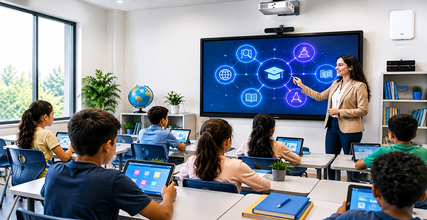
Education is becoming increasingly technology-driven, and classrooms are evolving with it. From interactive displays and digital content to wireless presentation tools and integrated audio systems, technology is changing how teachers deliver lessons and how students engage with learning. For schools, universities, training centres, and other educational institutions, adopting the right technology is no longer simply about having modern equipment. It is about creating a connected learning environment where technology supports teaching rather than becoming a distraction. Smart classroom solutions in the UAE bring together interactive displays, audio-visual systems, presentation technologies, connectivity, and classroom control tools to create more engaging and efficient learning spaces. When these systems are professionally designed and integrated, they can support different teaching methods, improve collaboration, and make digital content easier to use. This blog explores what a smart classroom is, how smart classroom technology works, the key components involved, its benefits, challenges, and how UAE institutions can choose the right solution provider. What Is a Smart Classroom? A smart classroom is a technology-enabled learning environment that integrates digital displays, interactive teaching tools, audio-visual equipment, connectivity, and classroom management technologies to support more engaging and collaborative teaching. Unlike a conventional classroom that may rely primarily on a whiteboard, projector, or printed materials, a smart classroom connects multiple technologies into a more interactive learning environment. Teachers can display multimedia content, annotate lessons, share digital resources, conduct interactive activities, and connect with remote participants when required. A typical smart classroom may include interactive displays, projectors, professional audio systems, wireless presentation solutions, cameras, document cameras, classroom control systems, and reliable network connectivity. The objective is not simply to add more technology to a classroom. The objective is to make technology easier to use while supporting the way educators teach and students learn. Why UAE Institutions Are Adopting Smart Classrooms Educational institutions across the UAE are increasingly adopting technology to support blended learning, multimedia teaching, collaboration, and digital content delivery. As classrooms become more connected, smart classroom technology provides educators with the tools to create more interactive and flexible learning environments. Another key factor is the changing nature of classroom engagement. Students are increasingly familiar with digital content, interactive platforms, and connected devices. Smart classrooms allow educators to incorporate presentations, videos, digital resources, interactive activities, and remote participation into lessons without disrupting the flow of teaching. The UAE’s diverse educational landscape also requires flexible and scalable technology solutions. Institutions can benefit from standardized AV and interactive systems across multiple classrooms, making technology easier to manage, maintain, train users on, and expand as the institution’s requirements evolve. Key Components of a Smart Classroom A smart classroom consists of multiple technologies working together. The exact configuration depends on the room, teaching requirements, student capacity, and institution’s infrastructure.   How Smart Classroom Systems Work A smart classroom connects teaching, AV, and digital technologies into one coordinated environment, allowing educators to manage lessons and content more efficiently. Types of Smart Classroom Solutions Not every educational space requires the same technology. Smart classroom solutions can be designed around the size, purpose, and teaching model of each environment.     Benefits of Smart Classrooms Smart classroom technology makes learning more engaging by combining interactive displays, multimedia content, digital resources, and collaborative tools. It allows educators to present complex concepts through different formats while giving students more opportunities to participate and interact with lessons. Connected classrooms also provide greater teaching flexibility and improve communication. Educators can move seamlessly between presentations, videos, online resources, interactive activities, and remote sessions, while integrated audio and video systems ensure clear communication in both physical and hybrid learning environments. Centralized controls simplify classroom management by allowing teachers to operate multiple devices through a unified interface. With a scalable technology framework, institutions can standardize smart classrooms across multiple spaces, simplify training and maintenance, and expand their technology infrastructure as their requirements grow. Challenges & Considerations for UAE Institutions Implementing a smart classroom requires more than installing interactive displays or projectors. Institutions should first assess their existing electrical, network, and structured cabling infrastructure to ensure it can support the new technology. The solution should also be easy for teachers to operate, with simple and consistent controls that fit naturally into everyday teaching. Integration is another important consideration. Displays, audio systems, cameras, presentation tools, and conferencing platforms should work together as one coordinated solution. Institutions should also consider scalability, ensuring the technology can be expanded across additional classrooms as requirements grow. Ongoing maintenance and user training are equally important for long-term performance. Teachers and administrative teams should be comfortable using the technology, while regular technical support helps minimize classroom disruptions. Budget planning should also account for installation, integration, training, maintenance, upgrades, and equipment replacement throughout the system’s lifecycle. How to Choose the Right Smart Classroom Provider in UAE Selecting the right smart classroom provider requires more than comparing products and prices. Look for a provider with experience in educational environments and an understanding of the requirements of classrooms, lecture halls, training spaces, and multi-room deployments. Choose a technology integrator that can handle the complete project, from solution design and installation to system integration, testing, configuration, and user training. The proposed solution should also be compatible with your existing network, devices, software platforms, and collaboration tools. For larger projects, scalability is essential. The provider should be able to maintain consistent technology standards across multiple classrooms while adapting each space to its specific requirements. This makes future expansion and system management more efficient. Finally, consider after-sales support and maintenance. Reliable technical support helps resolve issues quickly, minimize classroom disruptions, and ensure your smart classroom technology continues to perform effectively over the long term. Why SecureTrack Is the Right Choice SecureTrack delivers smart classroom solutions as integrated technology environments rather than standalone equipment. By combining AV, IT, ELV, networking, and system integration capabilities, we help educational institutions create connected and efficient learning spaces. Our solutions can bring together interactive displays, projectors, professional AV systems, wireless presentation, network connectivity, video conferencing, and centralized control. This integrated approach allows institutions to manage multiple

Access Control System
Blog

What Is an Access Control System? Complete Guide (2026)

Protecting a business goes beyond installing locks and security cameras. Modern organizations need a smarter way to manage who can enter their facilities, access sensitive areas, and use critical resources. This is where an access control system becomes essential. An access control system helps businesses regulate and monitor entry to buildings, offices, server rooms, warehouses, and other restricted areas. By replacing traditional keys with secure digital credentials, organizations can strengthen security, improve operational efficiency, and maintain greater control over their premises. Whether you’re managing a corporate office, healthcare facility, educational institution, retail store, or industrial site, choosing the right access control solution is a critical investment for long-term security and business continuity. This blog explores everything you need to know about access control systems, including how they work, their key components, different types, benefits, and how to choose the right solution for your business. What Is an Access Control System? An access control system is a security solution that regulates and manages who can enter specific locations, access certain resources, or use designated systems within an organization. Instead of relying on traditional keys, it verifies a user’s identity through secure credentials such as key cards, PIN codes, biometric authentication, or mobile devices before granting or denying access. Modern access control systems do much more than unlock doors. They help organizations define user permissions, monitor entry and exit activities in real time, maintain detailed access logs, and strengthen overall security across multiple locations. By ensuring that only authorized individuals can access sensitive areas, businesses can reduce security risks, protect valuable assets, safeguard confidential information, and improve compliance with industry regulations. How Does an Access Control System Work? An access control system follows a secure authentication process to determine whether a person is authorized to enter a specific area. When a user presents a credential, such as an access card, fingerprint, facial recognition, PIN, or mobile credential, the access reader captures the information and sends it to the access control panel or management software for verification. The system then compares the user’s credentials against predefined permissions and security policies. If the user is authorized, the controller sends a signal to unlock the door, gate, or barrier. If the credentials are invalid or access is restricted, entry is denied. Every access attempt, whether successful or unsuccessful, is automatically recorded to create a detailed audit trail. These records help businesses monitor activity, investigate incidents, and meet compliance requirements. Modern cloud-based access control systems also allow administrators to manage permissions remotely, monitor multiple locations, receive real-time security alerts, and grant or revoke access instantly from anywhere. Key Components of an Access Control System An access control system consists of several components that work together to authenticate users, manage permissions, and secure entry points. Each component plays a vital role in ensuring seamless and reliable access management. Types of Access Control Models Access control models determine how access permissions are assigned, managed, and enforced within an organization. The right model depends on your business structure, security needs, and compliance requirements. Why Businesses Need Access Control As businesses expand, managing physical security becomes increasingly complex. Traditional keys offer limited visibility and are difficult to manage when employees join, leave, or change roles. Lost or duplicated keys can also create significant security risks. Access control systems provide a smarter and more secure approach by allowing businesses to control exactly who can access specific areas and when. Permissions can be updated instantly without replacing locks or issuing new keys, improving both security and operational efficiency. Beyond protecting employees and assets, access control systems help organizations strengthen compliance, reduce unauthorized access, maintain accurate audit records, and support business continuity. Whether managing a single office or multiple facilities, they provide the visibility and control needed to operate securely in today’s business environment. Types of Access Control Systems Different access control systems are designed to meet varying security, operational, and business requirements. Choosing the right system depends on your organization’s level of security, scalability, and ease of management. Benefits of Access Control Systems An access control system offers more than just security. It helps businesses improve operational efficiency, strengthen compliance, and manage access with greater control across their facilities. By preventing unauthorized access, access control systems protect employees, visitors, valuable assets, and sensitive areas. They also provide centralized access management, allowing administrators to manage employees, visitors, and contractors while monitoring entry and exit activities in real time. Replacing traditional keys with digital credentials simplifies user onboarding, permission updates, and access revocation, reducing administrative effort and improving operational efficiency. Modern access control systems can also integrate seamlessly with CCTV, visitor management, and alarm systems to create a unified security infrastructure. As organizations grow, access control solutions can scale to meet changing security requirements, ensuring businesses remain secure, efficient, and prepared for future expansion. How to Choose the Right Access Control System Choosing the right access control system requires careful consideration of your business’s security needs, operational requirements, and future growth plans. The ideal solution should not only protect your premises but also integrate seamlessly with your existing infrastructure. When evaluating an access control system, consider factors such as the size of your facility, the number of users, the required level of security, and your preferred authentication methods, whether cards, biometrics, PINs, or mobile credentials. It’s also important to ensure the system can integrate with CCTV, fire alarms, and other building management systems while remaining scalable as your business grows. Partnering with an experienced system integrator ensures your access control solution is tailored to your organization’s unique requirements, complies with local regulations, and delivers reliable installation, maintenance, and long-term support. Why SecureTrack Is the Right Choice An access control system is only as effective as the expertise behind its design, installation, integration, and maintenance. At SecureTrack, we provide integrated access control solutions in the UAE, combining trusted technology, industry expertise, and quality-focused implementation to help businesses protect their people, assets, and operations. Our team designs and implements scalable access control solutions tailored to

Annual Maintenance Contract
Blog

School Annual Maintenance Contract (AMC): Preparing Your Campus for the Next Academic Term

For educational institutions, technology isn’t just about convenience. It’s essential for safety, learning, communication, and daily operations. That’s why leading educational institutions across the UAE don’t wait for equipment to fail. Instead, they use school vacations as the ideal time to inspect, service, and upgrade their systems through a comprehensive Annual Maintenance Contract (AMC). What Is a School Annual Maintenance Contract (AMC)? The annual maintenance contract (AMC) is a strategically planned agreement that keeps all technology systems operating efficiently throughout the year. Instead of an emergency responding system, the AMC is built around preventive maintenance, identifying and resolving issues before they become a problem. A professional educational campus  AMC should include: This proactive approach helps schools reduce downtime, improve system performance, and extend the lifespan of expensive technology investments. Regular inspections, system health checks, software updates, and network monitoring help identify potential issues before they become costly failures. Why Preventive Maintenance Matters More Than Emergency Repairs? Many schools choose to call a maintenance service only when something goes wrong. But is it a cost effective approach? NO! Preventive maintenance identifies potential issues before they affect daily operations. Instead of waiting for a CCTV camera to fail or a classroom projector to stop working, regular inspections help engineers detect worn components, outdated software, loose network connections, or declining equipment performance long before they become major failures. The benefits are significant. A well-managed School AMC helps educational institutions: Simply put, preventive maintenance costs far less than emergency repairs and helps schools avoid unnecessary interruptions during the academic year. And When Is The Best Time for Maintenance? Schools are different from almost every other type of building. Offices, hospitals, shopping malls, and hotels operate throughout the year, making maintenance difficult without disrupting normal activities. Schools, however, have scheduled vacation periods that provide the perfect opportunity for comprehensive maintenance. An empty campus allows technicians to work safely, efficiently, and without interrupting teaching. During school holidays, maintenance teams can: Instead of rushing through maintenance between lessons, engineers can thoroughly inspect every critical system. So when students return, the campus is ready to support another successful academic year. Every School Has More Technology Than You Think. Modern educational institutions depend on dozens of integrated systems working together every single day. Including, Security Systems CCTV Surveillance | Access Control | Visitor Management | Intrusion Detection | Perimeter Security | Emergency Intercoms Fire & Life Safety Fire Alarm Systems | Smoke Detection | Emergency Lighting | Voice Evacuation Systems Classroom Technology Interactive Smart Boards | Classroom Projectors | Interactive Displays | Digital Podiums | Wireless Presentation Systems | Audio Systems IT Infrastructure Structured Cabling | Fiber Optic Networks |Enterprise Wi-Fi | Network Switches | Firewalls | Servers | Storage Systems | UPS Systems Communication Systems Public Address Systems | IP Telephony | Digital Signage | Video Conferencing | IPTV Administration Systems Attendance Systems | Visitor Management | Access Logs | Network Monitoring | Data Storage Cyber Security Solutions Security patch management | Firewall health checks | Antivirus and endpoint protection | Network security reviews | Software and firmware updates | Backup verification | Server health monitoring | Performance optimization Data Storage Backup : Student information | Staff records | Attendance data | Examination records | Financial information | Learning resources | Administrative documents Without regular maintenance, these systems become vulnerable to security risks, software issues, and network failures. That’s why a comprehensive IT Annual Maintenance Contract (IT AMC) should also include regular updates helping schools protect their IT infrastructure while reducing the risk of cyber threats, data loss, and unexpected downtime BUT More Than Maintenance, AMC Is About Reliability! One Maintenance Partner Makes a Difference! Many schools work with different companies for different technologies. One handling CCTV, another manages networking or classroom AV, another contractor looks after fire alarm systems. For some, this approach seems manageable but when we look into a wider anger, this is costly and often leads to delays and confusion. As every system is interconnected, multiple maintenance organisers cannot understand the root cause of the problem. Working with one experienced systems integrator offers several advantages: Instead of coordinating between several service providers, schools can rely on one experienced team that understands the entire technology ecosystem. Why SecureTrack is your right school AMC provider SecureTrack provides comprehensive Annual Maintenance Contracts (AMC) for schools across the UAE, helping educational institutions maintain safe, secure, and technology-enabled learning environments. Our team provides SIRA & ADMCC compliant services ensuring regulatory compliance, audit readiness, and highest standards of security system implementation. Our experienced engineering team supports: We Do Maintenance Around Your Schedule! While school vacations are ideal for large-scale inspections and upgrades, critical maintenance shouldn’t always have to wait for the next break. At SecureTrack Technologies LLC, school maintenance activities are planned around your operational schedule. Whether it’s before school hours, after classes, on weekends, or during vacation periods, we work at the most suitable times to minimize disruption while keeping your campus technology reliable, secure, and fully operational. We understand that every school operates differently. That’s why our maintenance programs are planned around your schedule, allowing major servicing during school vacations and other campus free time while providing responsive technical support throughout the year. Whether you’re managing a school, university, training centre, or educational campus, our goal is simple, to keep your technology secure, reliable, and performing at its best. Modern schools depend on technology more than ever before. From campus security and classroom learning to communication, administration, and IT infrastructure, every system must work together to create a safe, efficient, and engaging educational environment. A proactive maintenance plan today can prevent costly disruptions tomorrow and help create a safer, smarter, and more connected learning environment for every student and educator.

Scroll to Top